Project Overview
The MAKE Lab (Making Awesome Knowledge-building Experiences) was established as a mobile makerspace to address equity gaps in access to design-based learning. I spearheaded the initiative when I was an Assistant Professor of Educational Technology at Texas State University, which successfully mentored university students while delivering free, hands-on creative learning workshops to underserved communities across Central Texas. The project’s success was underpinned by robust branding, strategic marketing for fundraising, and the development of a website that served as a permanent online resource repository.
Impact: Designed and implemented a comprehensive program that mentored 79 university students and raised $75,000 over seven years, enabling them to provide 2,480 hours of service for 1,405 local community members in 6 cities across Central Texas and 8 countries globally.
1. The Challenge and Opportunity
Challenge: At the time, access to high-quality makerspace tools and design-based learning activities was largely confined to affluent school districts and private institutions. Simultaneously, pre-service university students (i.e., students majoring in education with the goal of becoming teachers) required experiential learning opportunities to help them master developing and facilitating complex, multidisciplinary instructional activities.
Opportunity: I saw this as an opportunity to create a scalable, mobile solution to bridge this access gap while simultaneously using participatory action research (PAR) and service-learning models to provide university students with real-world pedagogical training. This approach would turn university students into co-developers and facilitators of content.
2. Solution: The Mobile MAKE Lab and Curriculum
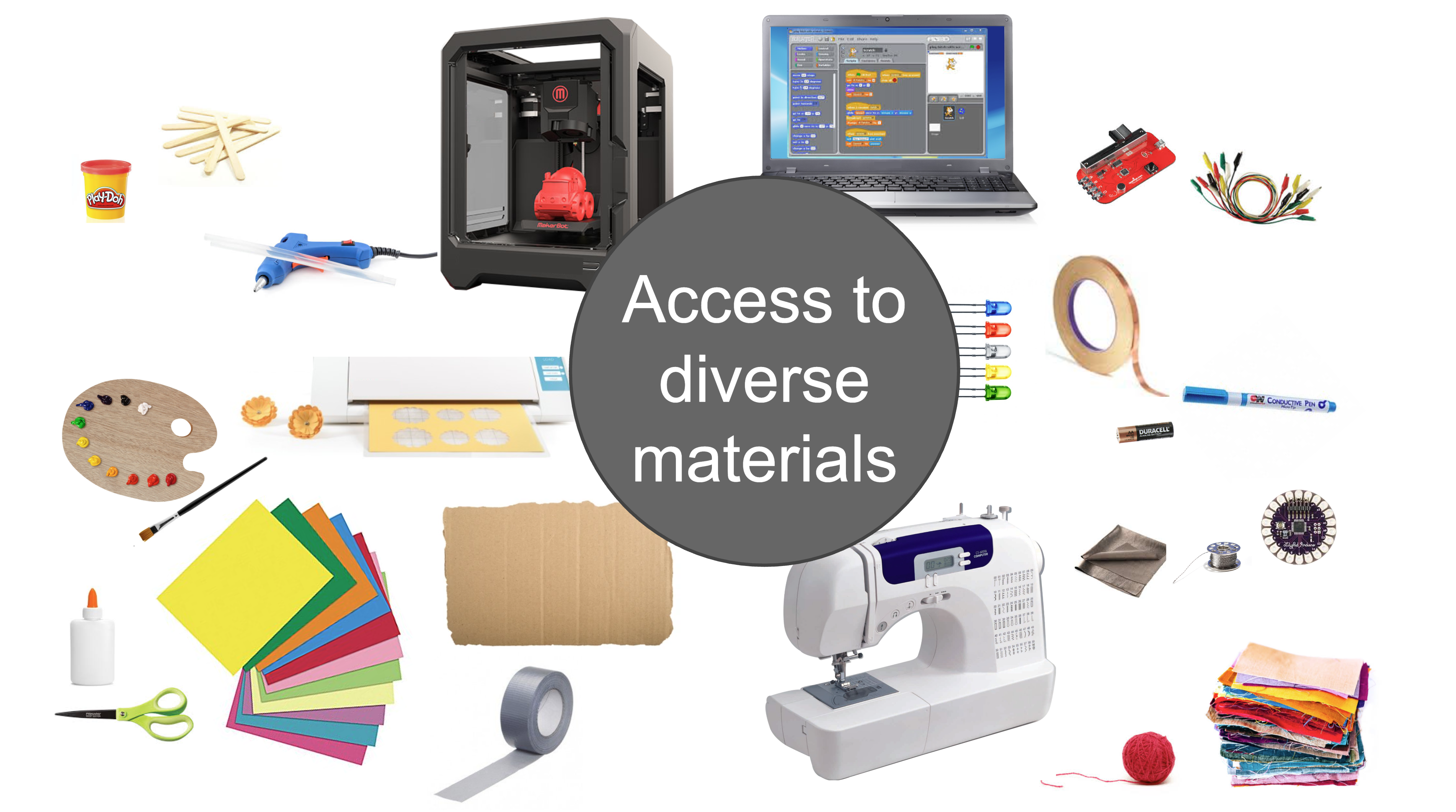
As the program leader, I developed the curriculum and coursework that formed the foundation of the MAKE Lab experience. The core solution involved equipping a mobile lab with diverse makerspace tools and materials (e.g., upcycling materials, common craft materials, circuit components, 3D printers, paper/vinyl cutting machines, laptops for digital design and coding) and using it as a vehicle for community engagement.
University students were mentored through a design-thinking process:
- Design & Iteration: After receiving training in design-based learning strategies, materials, and tools, university students applied their prior knowledge and content area specializations to create original, hands-on design activities. These were rigorously tested in class with classmates prior to deploying in the community, ensuring they were age-appropriate, safe, and inspired a range of creativity.
- Community Facilitation: Activities were implemented through free workshops hosted at local libraries, cultural centers, and K-12 schools. Participant feedback was collected throughout the experiences in the form of diary studies, interviews, and exit ticket reflections.
- Reflection & Curation: Following events, students engaged in PAR by reflecting on community participant engagement, lessons learned, and recommended activity iterations.
3. Branding, Marketing, and Funding Strategy
A critical component of the MAKE Lab’s long-term viability was establishing a compelling brand identity to spread the word, attract donations, and secure external funding.
Naming & Identity
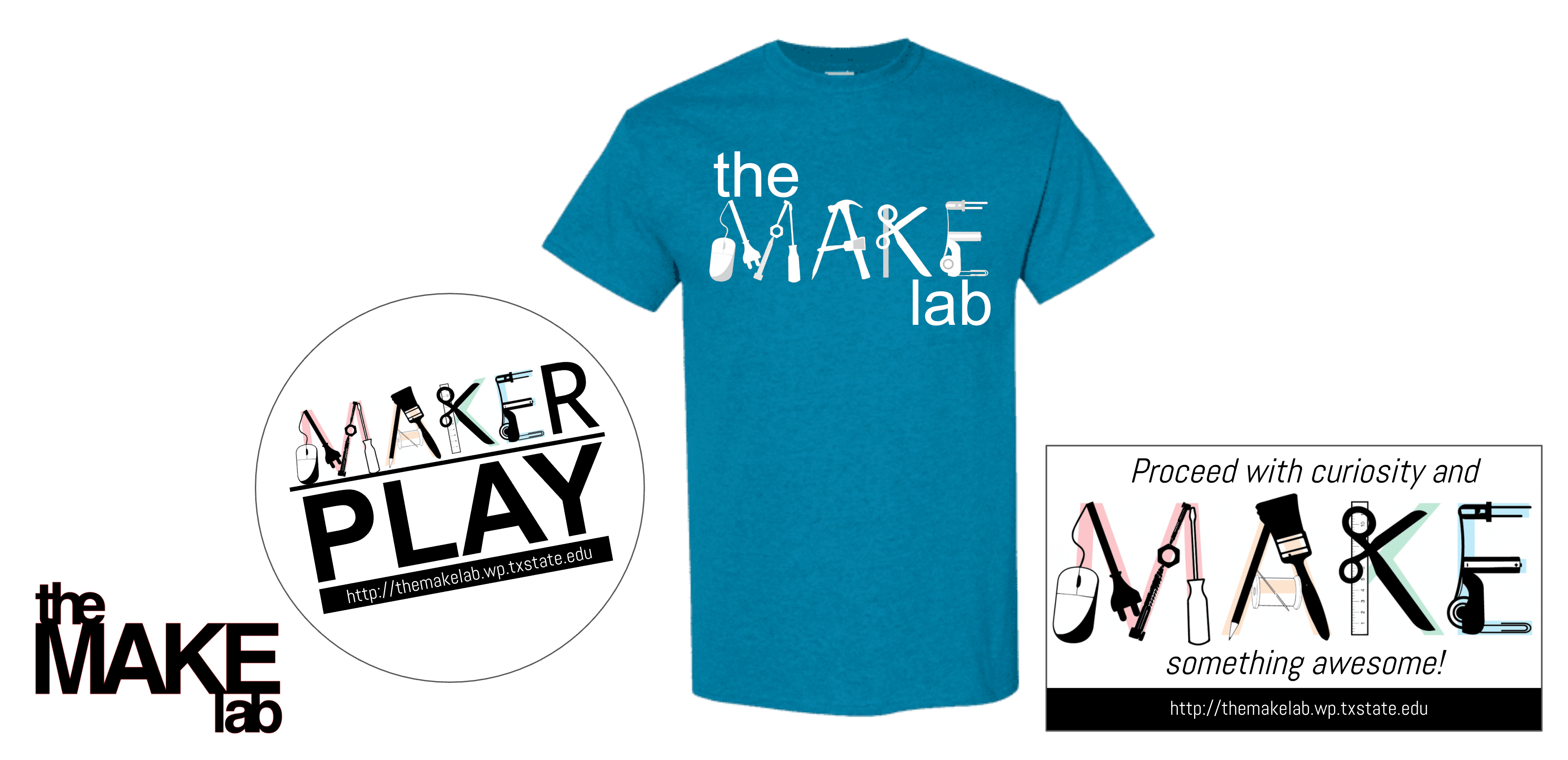
The name, The MAKE Lab, was chosen to convey the dual mission of the program: Making Awesome Knowledge-building Experiences. The philosophy valued both structured, criteria-focused design (i.e., strategic learning of elements and principles or design and/or multidisciplinary content concepts) and unstructured, playful tinkering (i.e., serendipitous learning, artistic expression). The playful nature of the activities was emphasized in the tagline: “proceed with curiosity and MAKE something awesome.”
Marketing Materials and Fundraising
I developed a scalable visual identity beginning with a vector-based logo that incorporated the diverse materials used in the lab. The imagery embraced the playful nature of crafting spaces and materials, while also introducing affordable digital design technologies. Multiple logo variations were created by adding full-color photographs of successful student projects behind the text, effectively showcasing the program’s outcomes in its own branding.

These assets were leveraged to produce various marketing materials for outreach and advertising, including website banners, t-shirts, stickers, and stencils. The range of marketing materials helped me secure donations and external funding to keep the initiative operational for seven years (e.g., Maker Camp affiliate status and materials donation from Make Magazine and Google; Tufts University Novel Engineering grant; Texas State University Research Enhancement Program grant).
4. The Digital Repository: The MAKE Lab Website
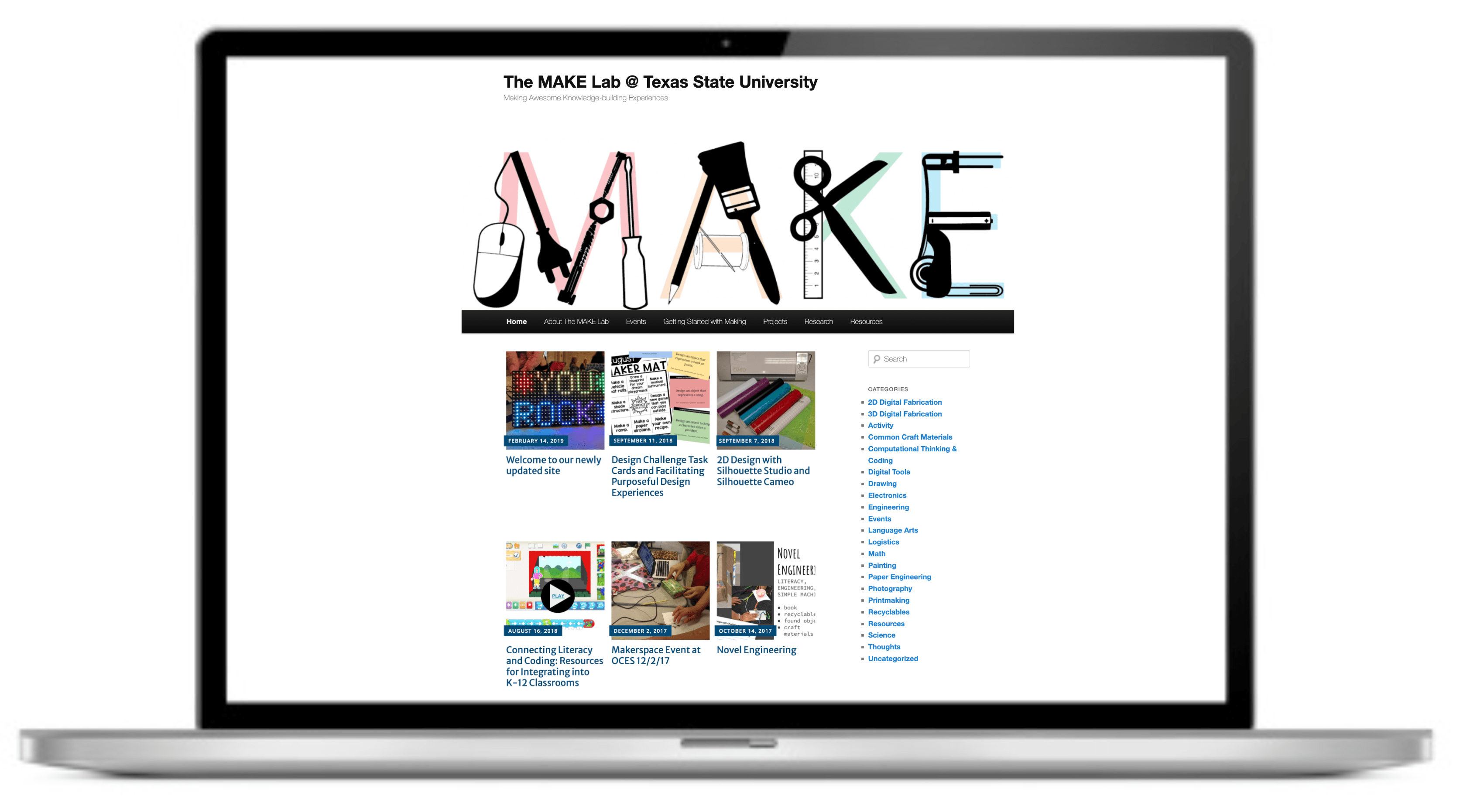
To scale the pedagogical impact beyond Central Texas, I developed and managed the MAKE Lab website, evolving it into a valuable, open-source resource.
- Evolution: The site initially served as a monthly blog, publishing the university students’ required post-event reflections and insights (the final step of their PAR cycle).
- Curation: The site quickly matured into a curated, online repository of peer-reviewed, teacher-created resources for facilitating makerspace activities in diverse content area contexts. This provided a permanent, accessible library for educators globally.
5. Impact and Results
Over seven years, the comprehensive program achieved significant, measurable results in both student mentorship and community outreach:
| METRIC | RESULT |
| Funding Raised | $75,000 in grants and donations |
| Students Mentored | 79 pre-service university students |
| Service Hours Delivered | 2,480 total hours of community service |
| Community Members Reached | 1,405 local community members served |
| Geographic Reach | In-person workshops in 6 cities across Central Texas and online website outreach across 8 countries |
| Visibility | Featured in 4 local newspapers and 4 journals |
The MAKE Lab successfully served as a high-impact mentorship model, empowering future educators while extending critical learning resources to communities that needed them most.
Featured publications:
Smith, S. (2017). Mobile makerspace carts: a practical model to transcend access and space. In M. Mills, & D. Wake (Eds.), Empowering learners with mobile open-access learning initiatives (pp. 58-73). Hershey, PA: IGI Global. Available at: https://eric.ed.gov/?id=ED574989
Smith, S. (2017). Student-Created reflective video as meaningful formative and summative assessment during hands-on learning experiences. In P. Resta & S. Smith (Eds.), Proceedings of Society for Information Technology & Teacher Education International Conference 2017 (pp. 1191-1198). Chesapeake, VA: Association for the Advancement of Computing in Education (AACE). Available at: https://www.learntechlib.org/primary/p/177896
Smith, S. (2018). Making visual connections: Children’s negotiations of visualization skills during a design-based learning experience with non-digital techniques and digital fabrication technologies. Interdisciplinary Journal of Problem-Based Learning. 12(2), Article 4. Available at: https://doi.org/10.7771/1541-5015.1747
Smith, S. (2014). 3D printing: Where art & technology collide. Trends in Art Education. 57(1), 16-23. Available at: https://www.taea.org/TAEA/Docs/2014/TRENDS-2014.pdf
 Shaunna Smith's Portfolio