Project overview
This project involved the development of a learning experience in a newly developed elementary library makerspace to support student engagement in reading. Taking inspiration from an existing research-proven activity concept, Novel Engineering, a hands-on event was developed and facilitated to inspire more students to participate in the school’s reading challenge. The process used design thinking to uncover what some of the pain points were for the librarian and students, identify student interests, conduct and evaluate a pilot with students, iterate procedures based on pilot, and implement final experience with school.
My role
I consulted with the librarian, which included observing needs, identifying opportunities, and designing options for facilitating creative literacy-building activities using safe materials that the elementary students could easily use with minimal adult assistance.
Process details
Collaborative planning
While the librarian enjoyed the students’ use of the new library makerspace area, she continued to wonder how to engage more students in reading-related activities. She not only wanted to increase general enthusiasm toward reading but she also wanted to increase participation in the annual state book award reading contest (i.e., students earn points by reading award winning books and completing an online reading comprehension test about the book).
Ethnographic observations
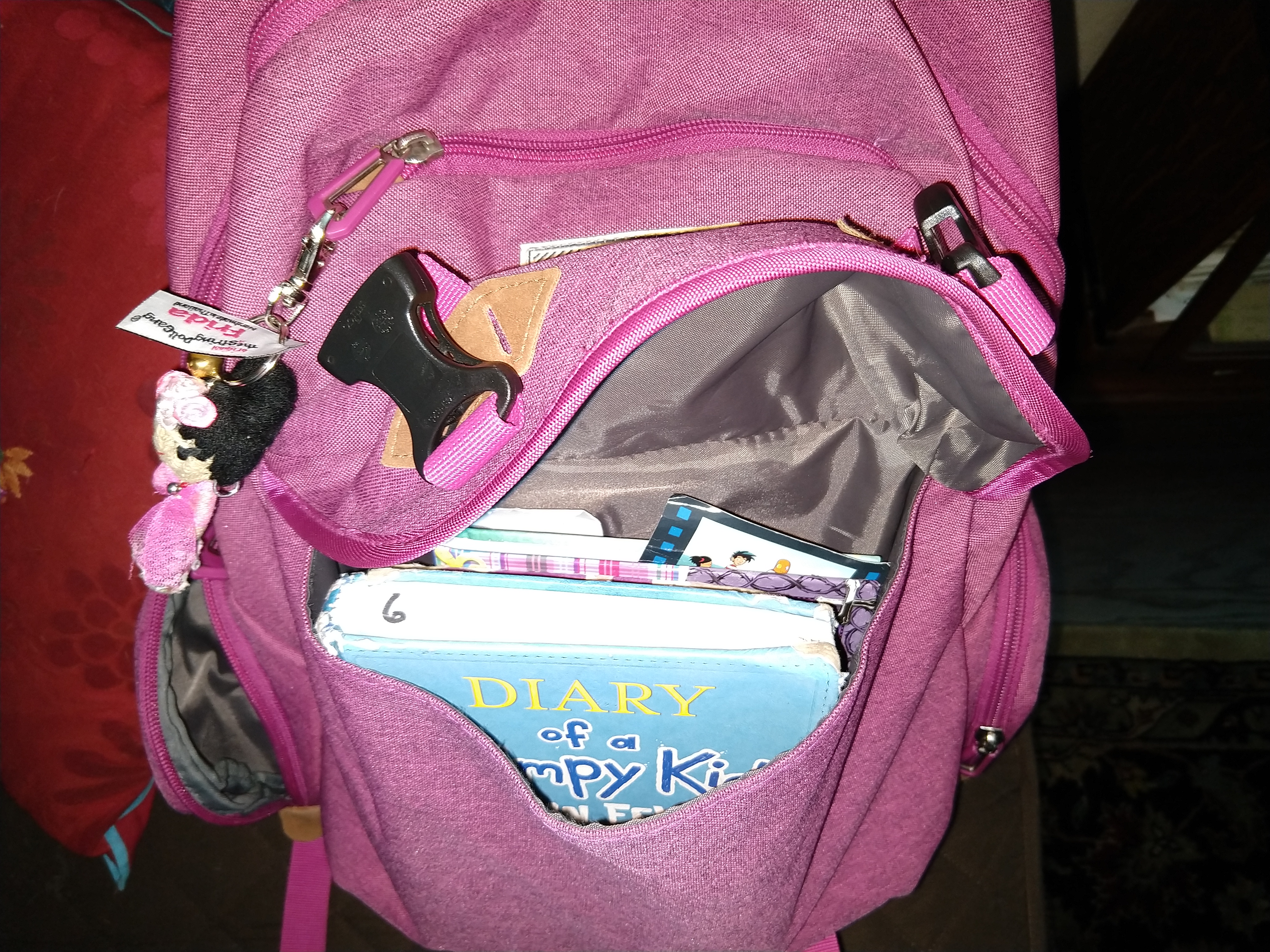
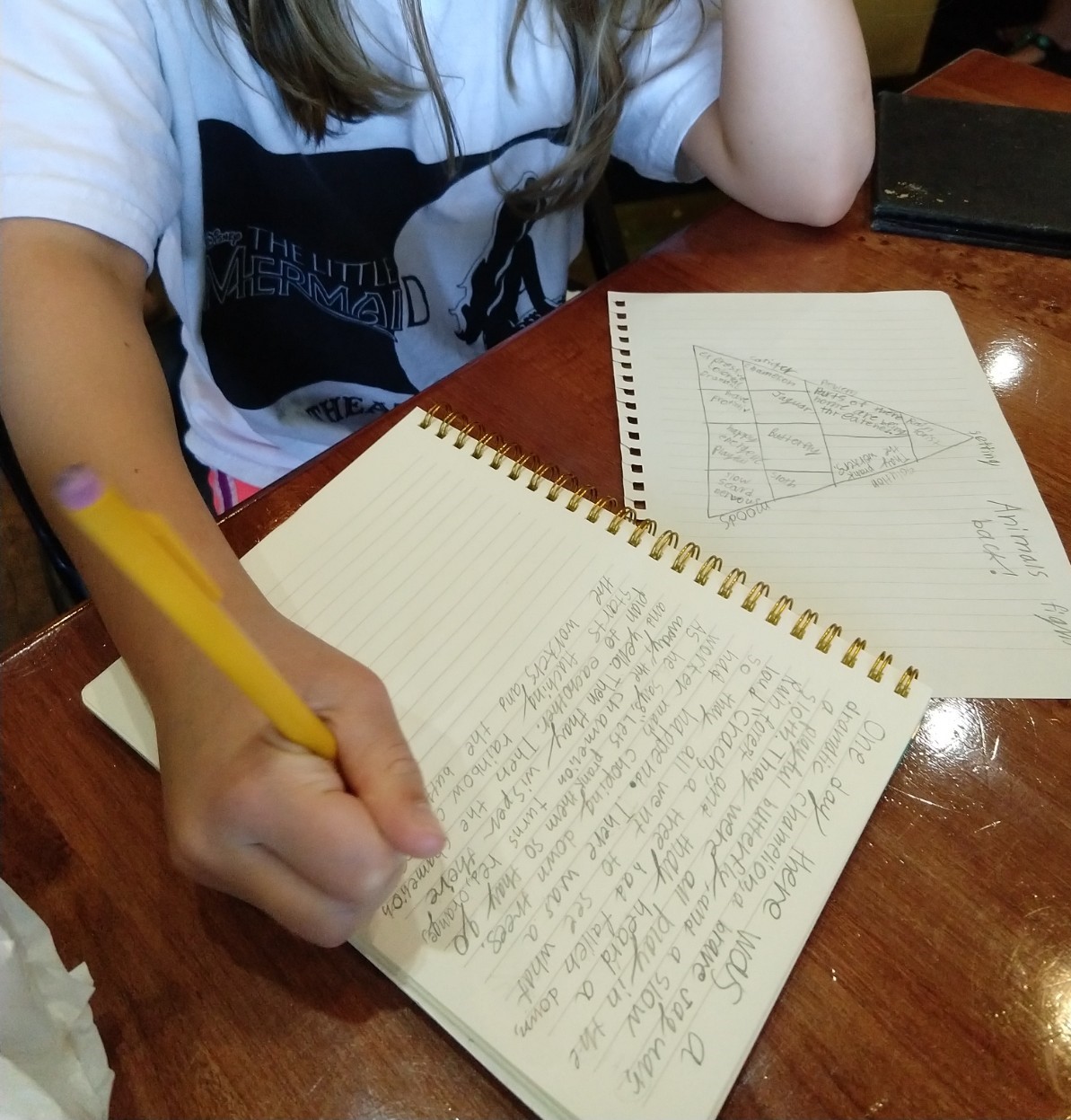
The first step in the process included conducting research in the library to observe student reading habits. I observed that the students gravitated to certain types of books, including the state award winners and graphic novel collections. Upon asking a few of the students casual questions, I discovered that many students wanted to participate in the annual state book award contest; however, they were only interested in certain books that always seemed to be checked out. Several students expressed that they enjoyed graphic novels because of the visual illustrations with playful storylines but that only a few of the state award winners were graphic novels. Additionally, I noticed some students in the self-directed makerspace area writing their own stories and creating unique objects with craft materials to accompany stories that they had written.
Stakeholder debrief
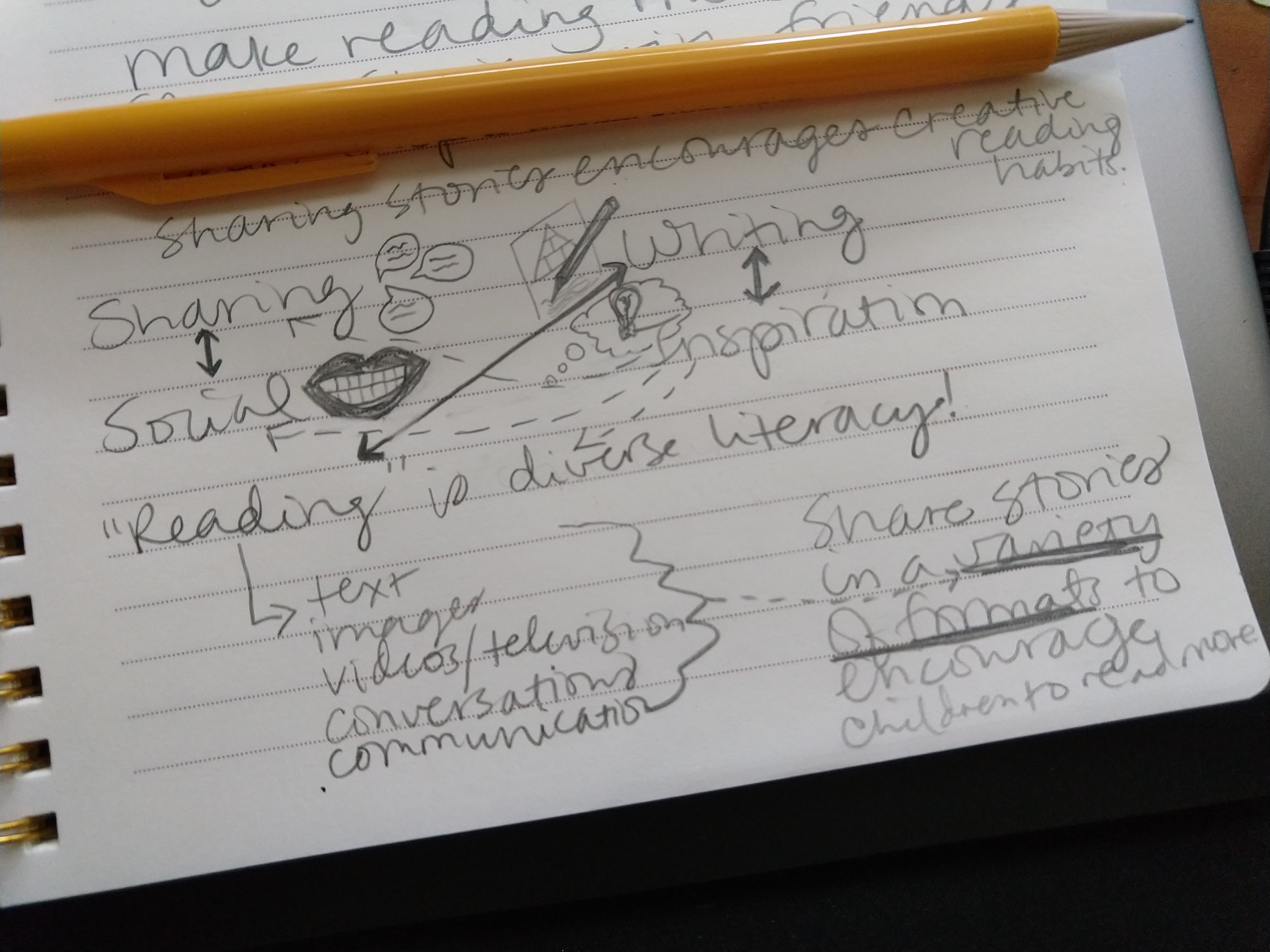
When I debriefed with the librarian we discussed insights about 1) reading is a diverse literacy, and 2) students wanted to share stories in a variety of formats. The librarian mentioned interest in a research-proven activity called Novel Engineering, which involved students designing prototype solutions for problems that characters are experiencing in a novel. The librarian and I collaboratively researched and discovered a variety of example artifacts from students in formal classrooms and informal workshops, which included use of common inexpensive materials (e.g., recyclables, tape, glue, paper clips, string).
Brainstorming with student users
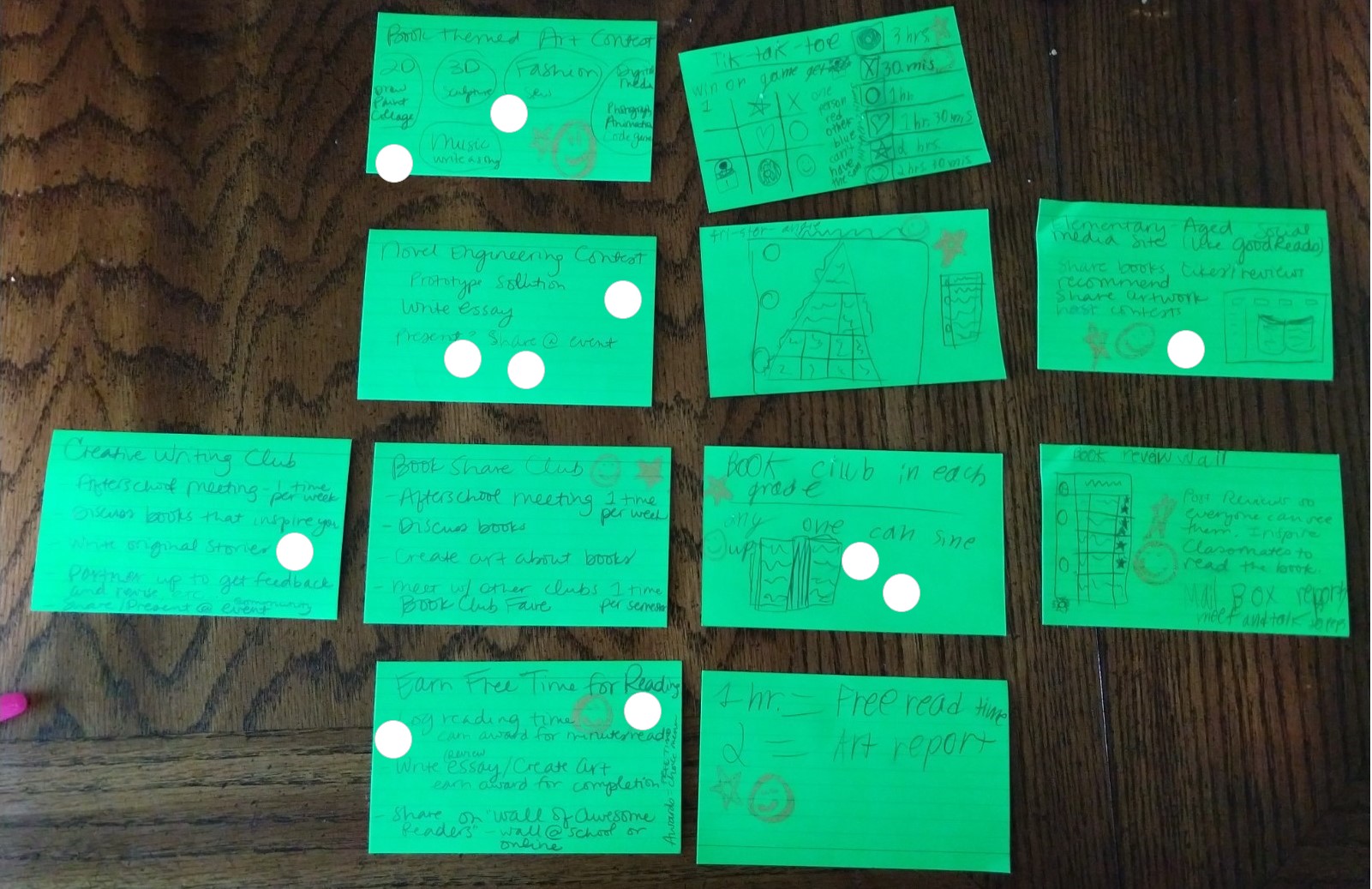
After the debrief, the librarian invited three students to the library for a collaborative brainstorming session, which we facilitated by writing ideas on note cards, dot voting (students got three votes each and adults got one vote), and discussion. As a whole, students expressed an interest in doing more than just taking a reading comprehension test about the books they read…they wanted to demonstrate their reading comprehension in more creative ways, including creating objects inspired by books and having clubs to discuss shared interests in reading and writing. We discussed the ideas that received two votes, including “Book Themed Art Contest”, “Earn Free Time for Reading”, and “Book Club in Each Grade”. While the students liked the idea of “Earn Free Time for Reading” and “Book Club in Each Grade”, two students mentioned that their classroom teachers had something like that for their class and that maybe the librarian could suggest those ideas to all teachers so they could implement them. Students agreed that “Book Themed Art Contest” was similar to the “Novel Engineering Contest” idea, which received three votes. The librarian liked both ideas and agreed that they were both valuable but suggested one idea should be chosen to try out first. The group agreed to start with “Novel Engineering Contest”.
Pilot testing with students
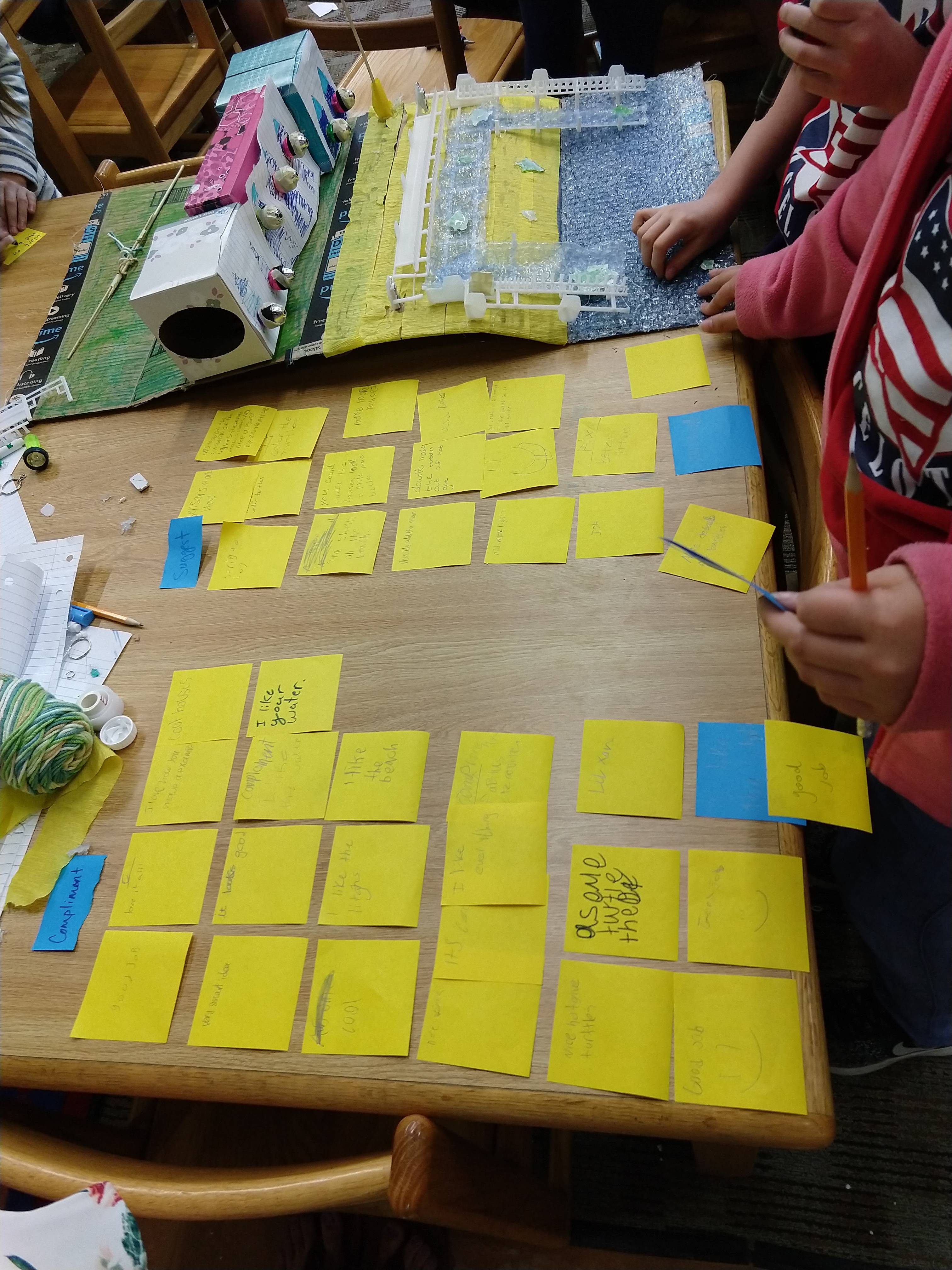
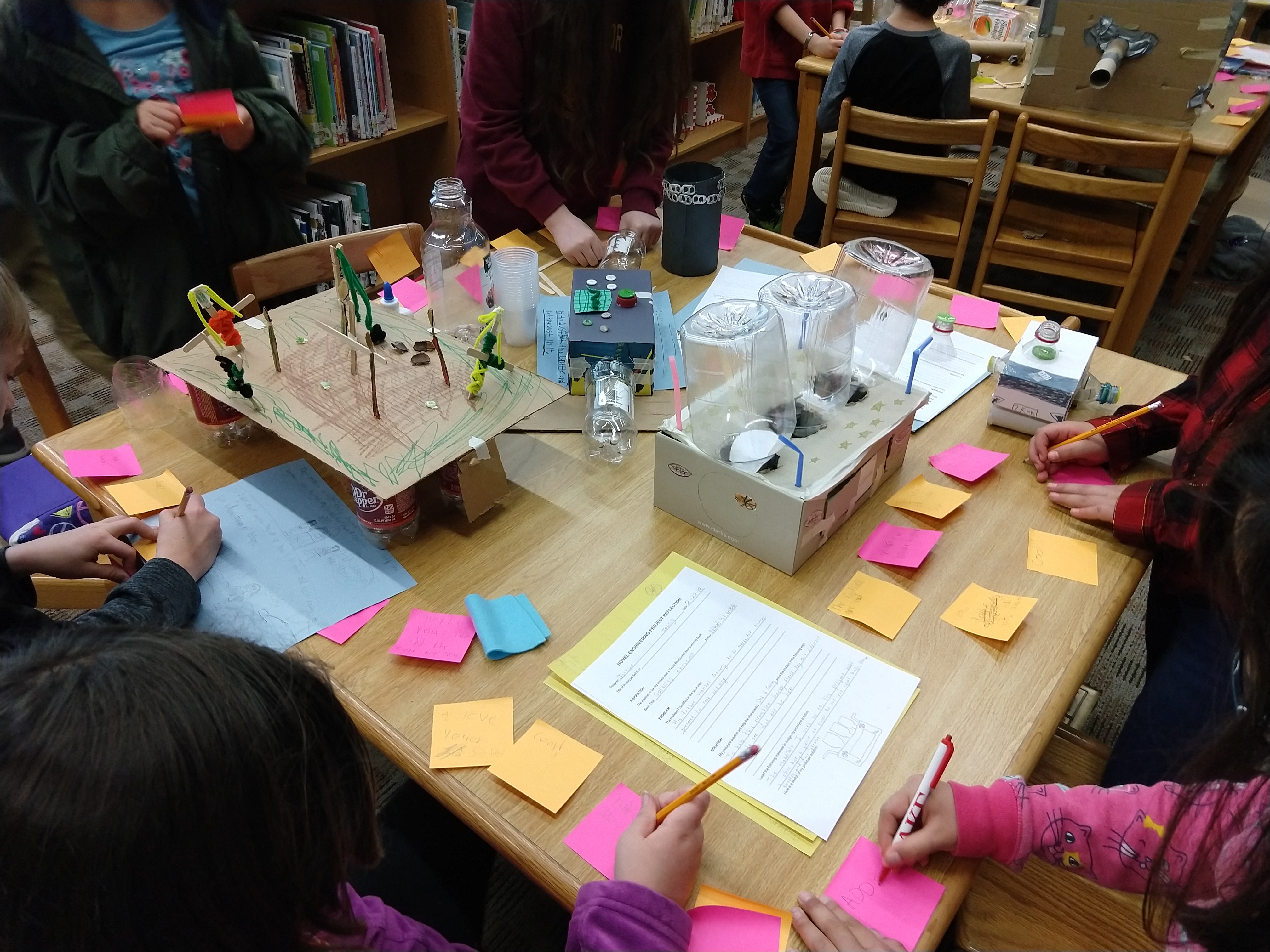
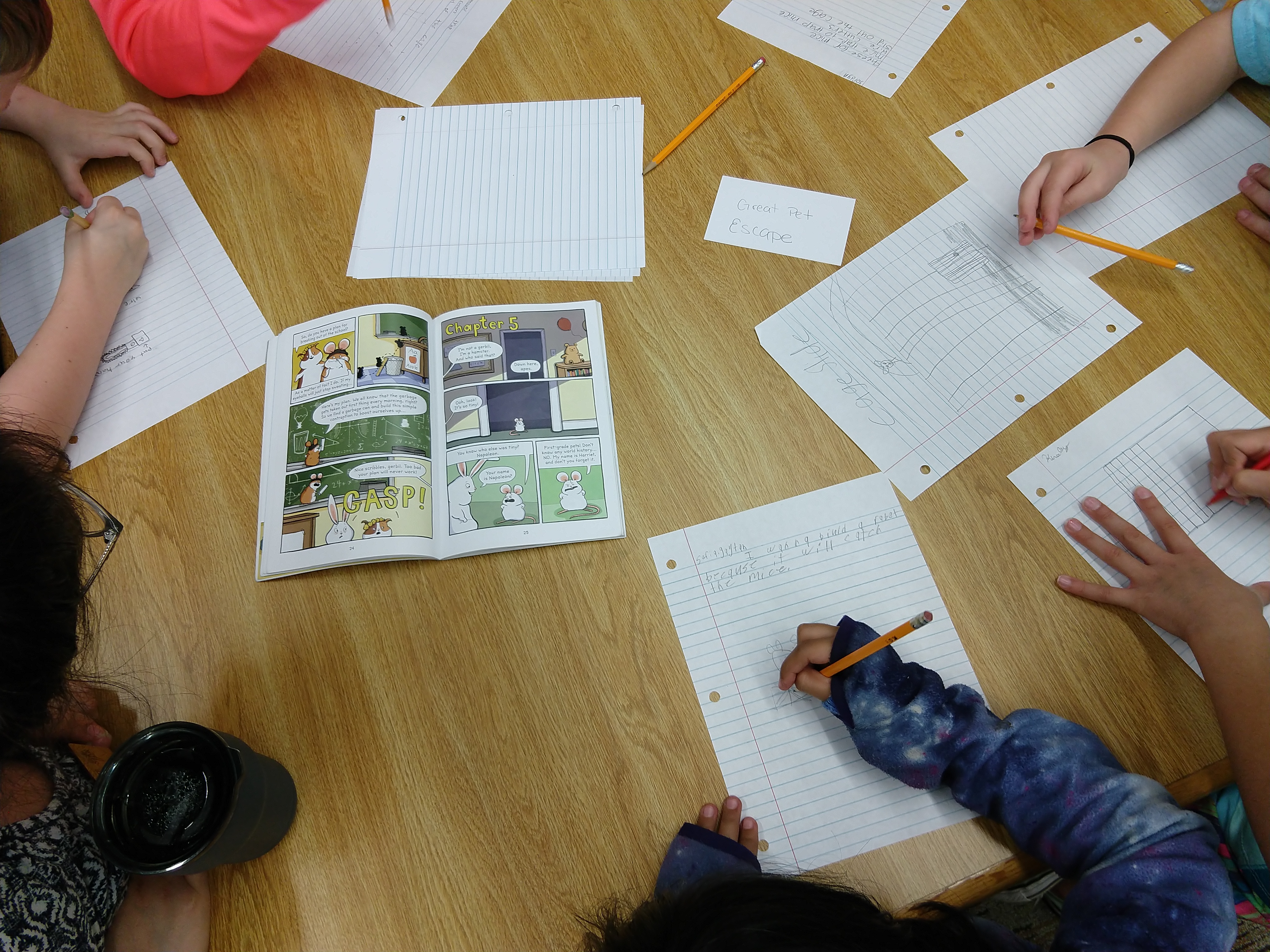
A pilot was conducted with a group of six students from 3rd-5th grade. The students were very excited to create objects based on books they had read and they enjoyed sharing thoughts about the characters, environments, and story lines. Students loved giving each other feedback on their prototypes (e.g., using post its to provide compliments and actionable suggestions) and iterating the designs during the engineering design process. They especially enjoyed displaying their finished work on the library shelves for their peers to see later. As a bonus, the librarian noticed that other students who were passing by the hallway came and came inside to ask what was going on because they wanted to make something too. This successful pilot inspired the librarian to create a special event “A Day of Novel Engineering” as the reward for students who read a certain number of state award books.
Implementation
To facilitate and implement the event, I helped the librarian develop protocols for teachers and parents to grant the students permission to miss regular class for a day in order to spend the day in the library for the event. To help with supervision, my teacher education students and I volunteered to help facilitate small groups throughout the day. To ensure there were enough craft materials available for the students to use, I helped the librarian set up a materials donation box in the front office. Over the course of a few weeks a variety of materials were donated, including cleaned recyclable materials, scrap craft supplies, and new packages of tape and hot glue.
Impact
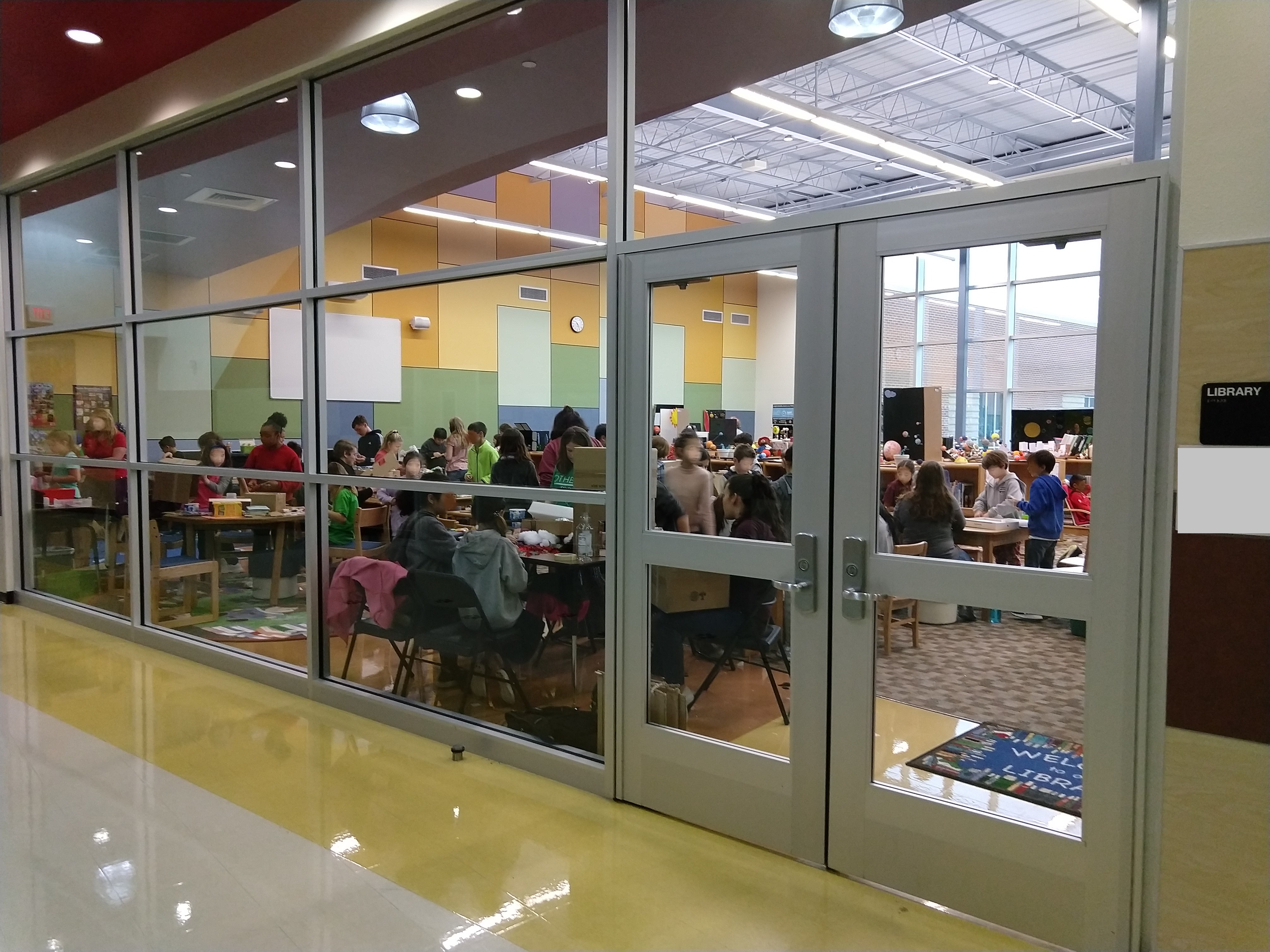
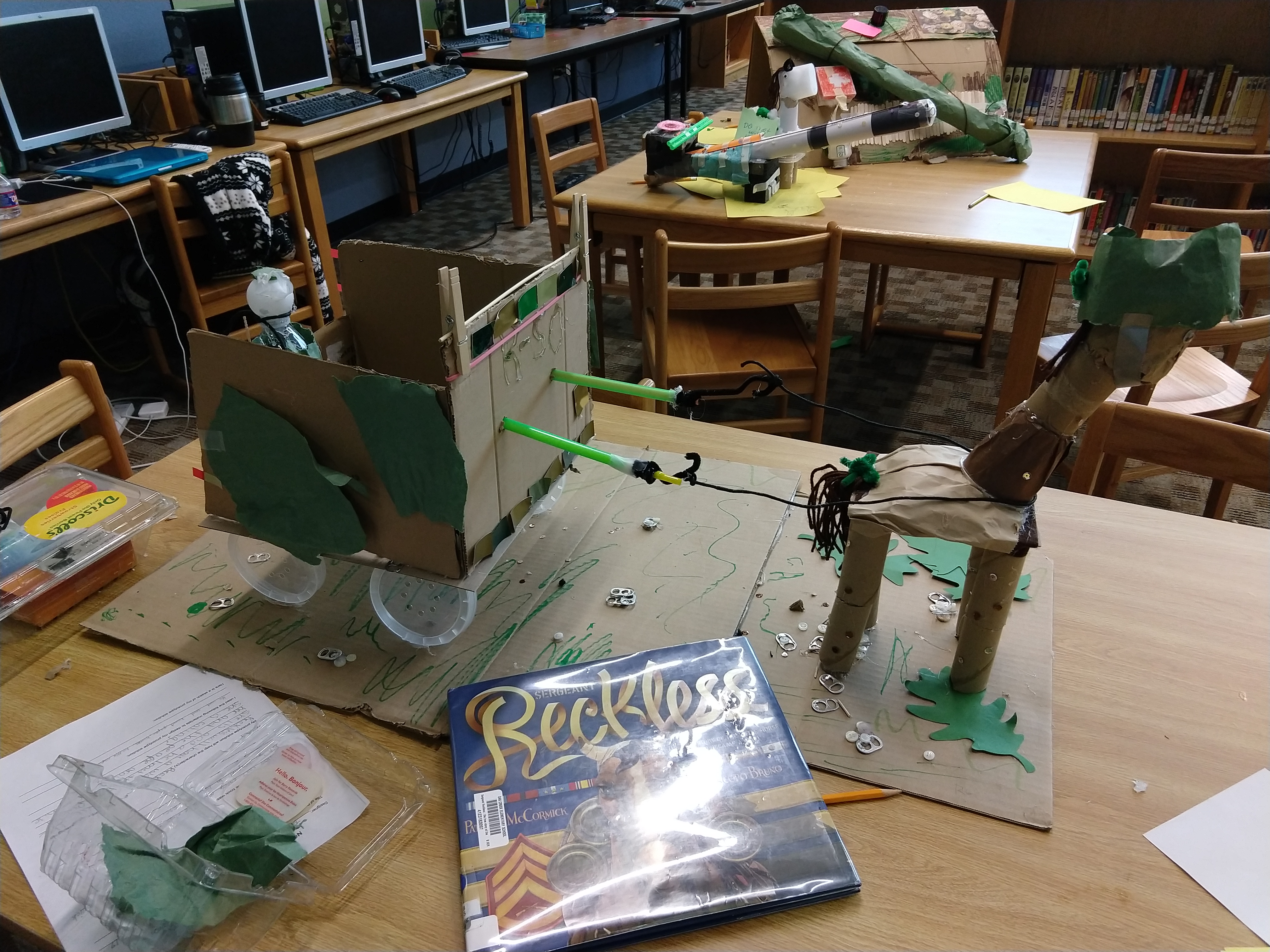
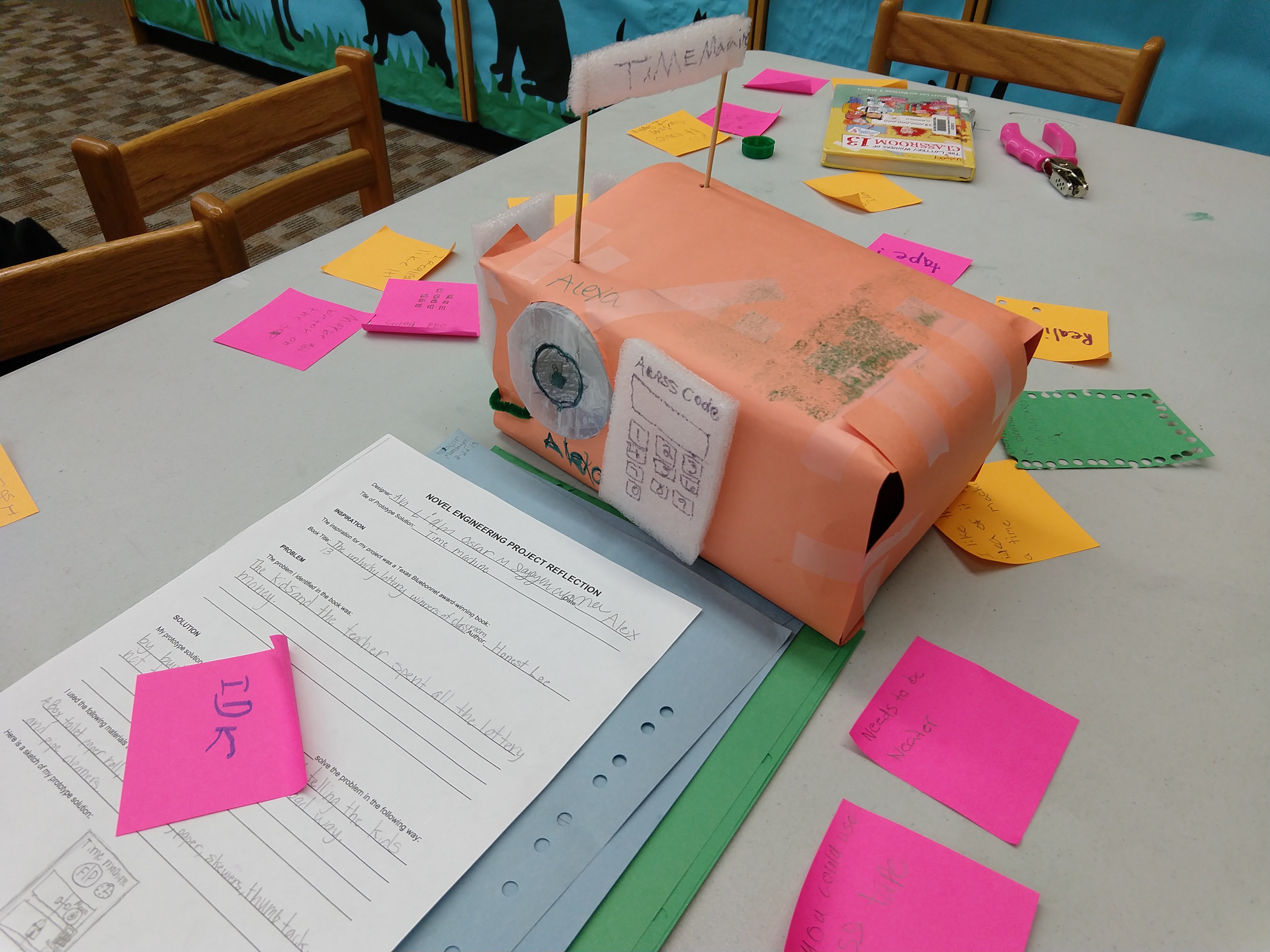
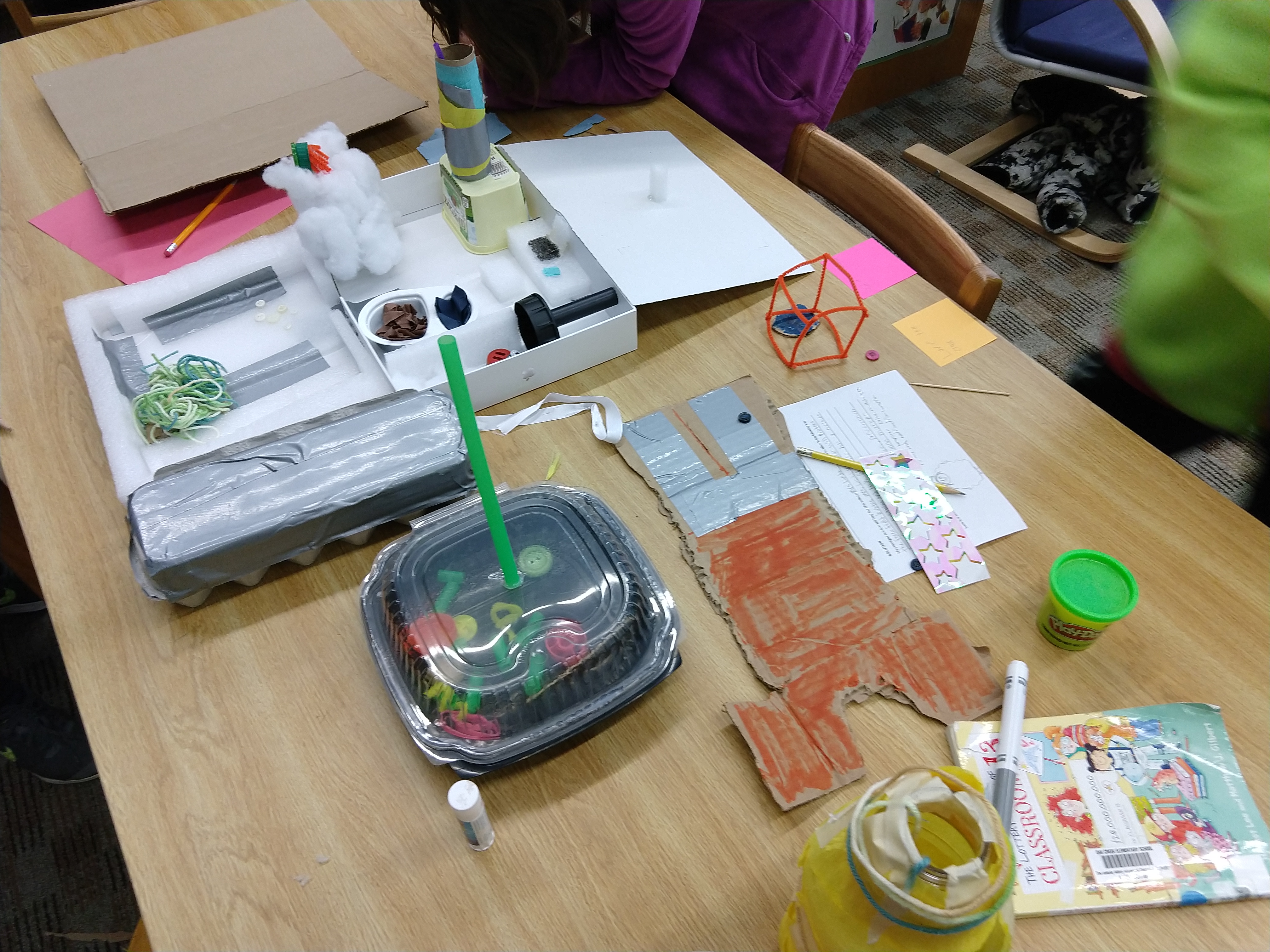
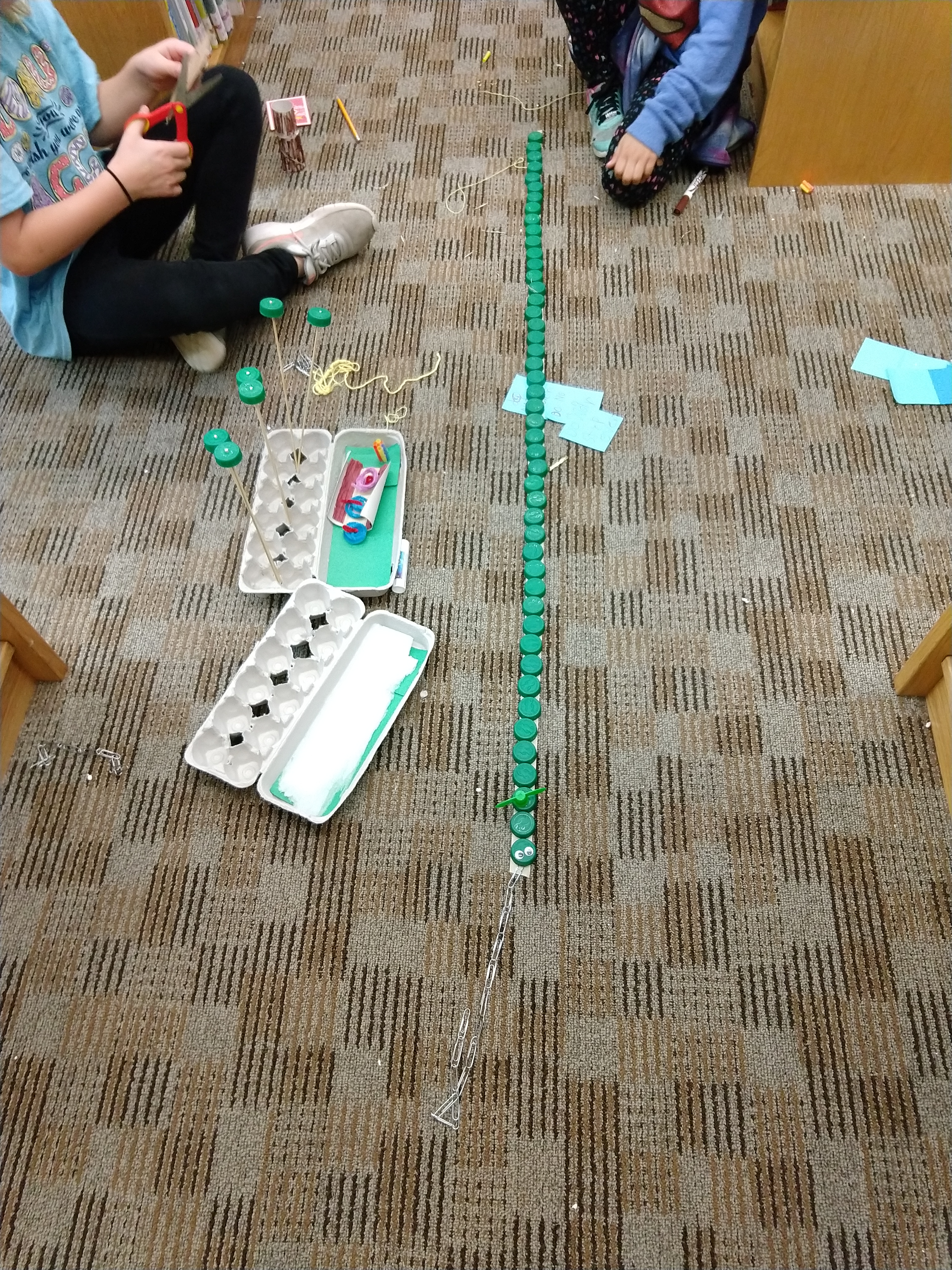
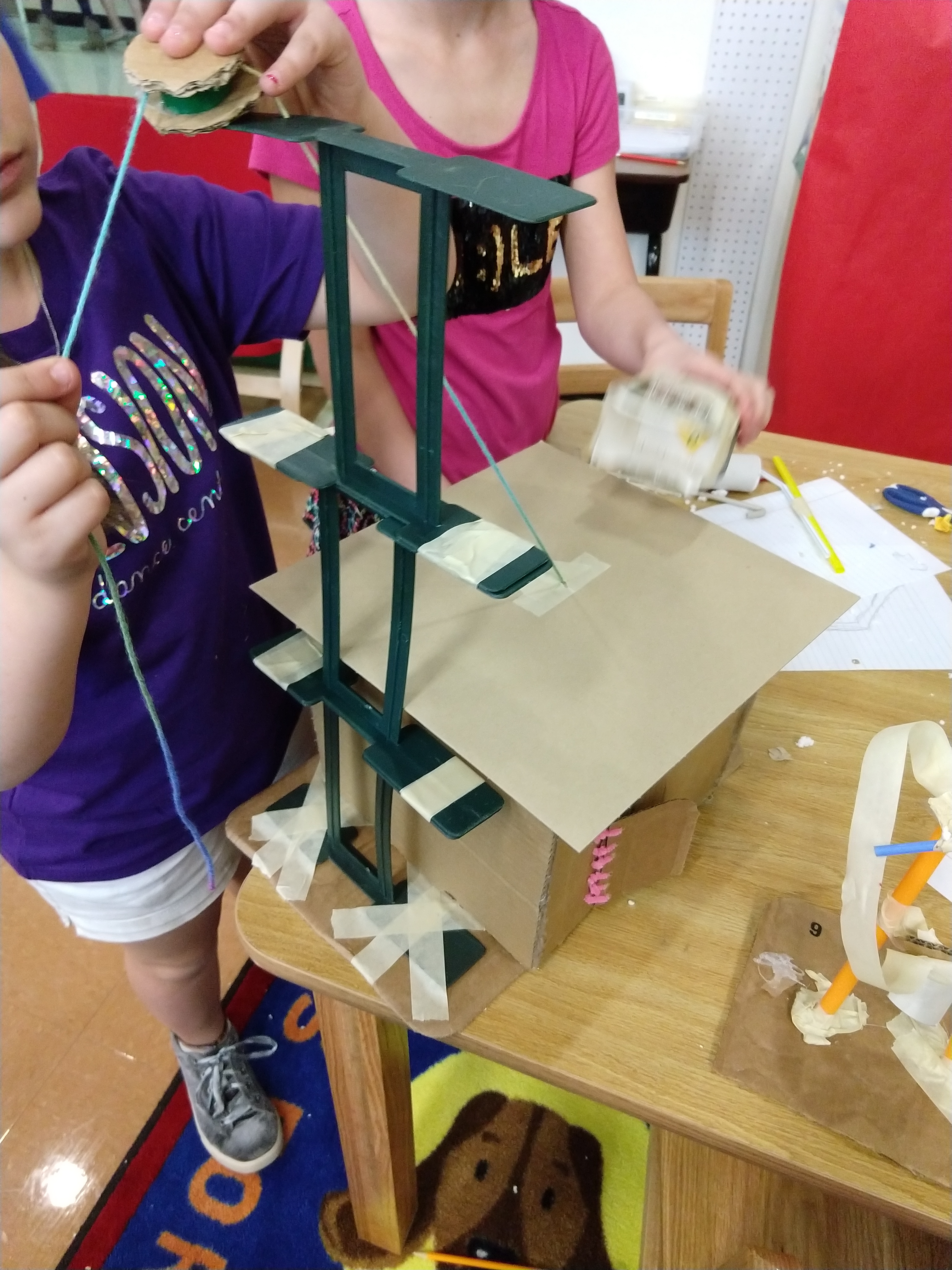
The inaugural event was well-attended by 20 students who met the reading goal, which was three more students than the previous school year. The following school year there were over 40 students who qualified to attend the event, which was double from the inaugural event and indicated a significant increase in student reading engagement. Below, you can see images from the student interactions at the event.